Why Does My CPAP Make Me Feel Worse?
CPAP was supposed to change your life — but you feel more exhausted, bloated, and anxious than before. Here is why that happens and what you can do about it.
Reviewed by Dr. Andrew Gamache, DDS, D-IAOS
Last updated February 2026
Key Takeaways
- Over 33% of CPAP users experience aerophagia (air swallowing), and 15-20% report claustrophobia or anxiety — problems that can make treatment feel worse than the condition itself.
- Incorrect pressure settings are the most common fixable cause: too high triggers central apneas and air swallowing, too low leaves residual events that prevent restorative sleep.
- If you have systematically tried mask changes, pressure adjustments, and humidification without improvement, CPAP intolerance is a documented clinical finding — not a personal failure — and alternatives like oral appliance therapy exist.
You Are Not Imagining It
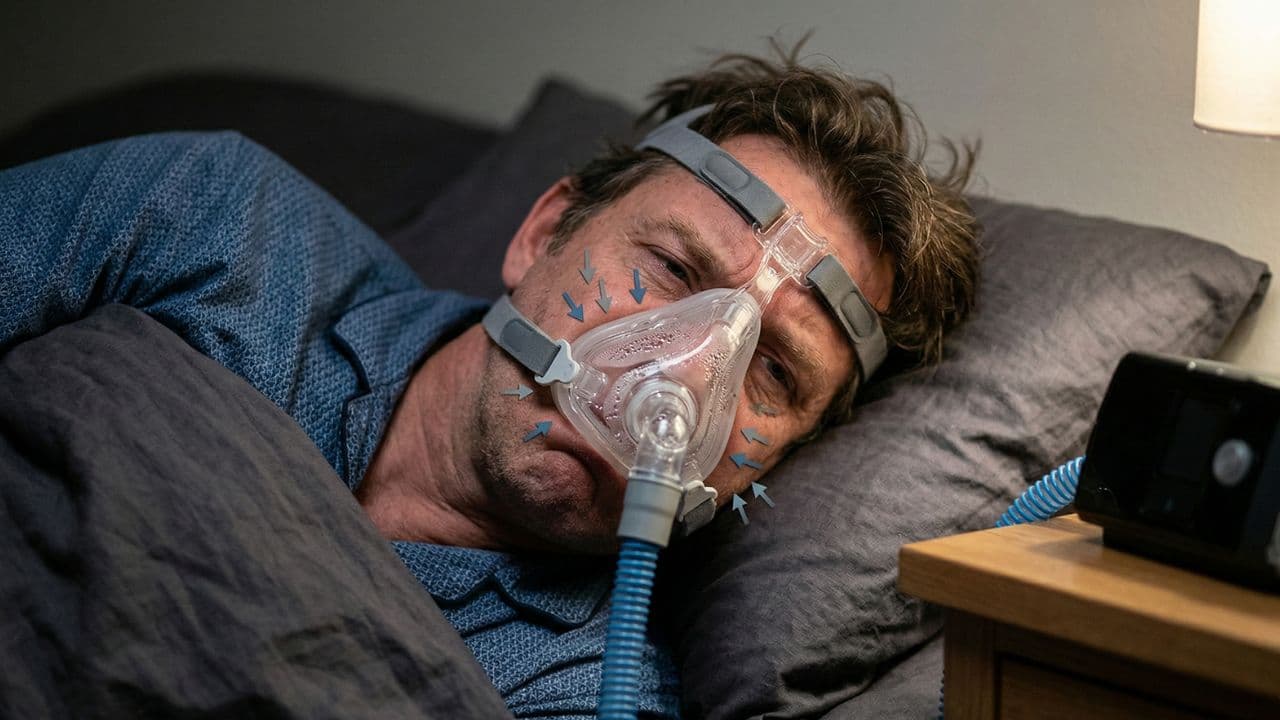
You were told CPAP would change your life. You expected to wake up feeling rested for the first time in years. Instead, you feel worse. More exhausted. More frustrated. Maybe even dealing with new symptoms you did not have before — bloating, headaches, anxiety about going to bed. If this is your experience, you are not doing something wrong. This is a recognized pattern, and it has explanations.
CPAP is the gold-standard treatment for obstructive sleep apnea, and when it works well, the results are genuinely transformative. But “when it works well” is doing significant work in that sentence. A substantial percentage of patients go through a period where CPAP makes their sleep worse before it gets better — and for some, the “better” part never arrives because the underlying issues are never addressed.
What You Were Told to Expect:
What You Are Actually Experiencing:
The gap between expectation and reality is not a personal failure. It has specific, identifiable causes — and most of them are fixable. Understanding why CPAP is making you feel worse is the first step toward either solving the problem or finding an alternative that works for your body.
Pressure Settings and Mask Issues
The most common reason CPAP makes patients feel worse is a mismatch between the pressure setting and what your body needs. CPAP delivers a continuous stream of pressurized air, and getting that pressure exactly right is more nuanced than most patients realize. Too low, and your apnea events continue. Too high, and new problems emerge.
Pressure Too High
Excess pressure forces air into the stomach (aerophagia), causes central apneas where the brain temporarily stops signaling to breathe, and makes exhaling feel like breathing against a wall. Many patients instinctively pull off the mask during sleep because the pressure feels suffocating.
Pressure Too Low
Insufficient pressure leaves residual apnea events uncorrected. Your AHI may drop from 30 to 12 — technically an improvement — but you still experience enough oxygen desaturations and micro-arousals to prevent restorative sleep. You feel almost as tired as before, but now with the added burden of wearing a mask.
Mask Leak
Air leaking around the mask reduces effective pressure delivery and creates noise and skin irritation. Large leaks can drop your effective pressure below the therapeutic threshold. Your machine data may show good hours, but the treatment is not actually working during those hours.
If your CPAP is making you feel worse, the first step is checking your machine data. Most modern CPAP machines track your nightly AHI, leak rate, and usage hours. If your residual AHI is above 5, your leak rate is consistently high, or you are removing the mask unconsciously during the night, these are signals that your current setup needs adjustment. For a complete overview of CPAP-related problems, see our guide to common CPAP side effects and solutions.
Aerophagia and Physical Discomfort
Aerophagia — the medical term for air swallowing — is one of the most undertreated causes of CPAP making patients feel worse. When pressurized air enters the esophagus instead of the lungs, it causes stomach distension, bloating, gas, belching, and abdominal pain. For some patients, aerophagia is severe enough to cause nausea and chest discomfort that mimics cardiac symptoms.
Important: Studies estimate that 33% or more of CPAP users experience aerophagia to some degree. It tends to be worse at higher pressure settings (above 15 cm H₂O) and in patients who breathe through their mouths or sleep on their backs. If you are waking up with stomach pain, bloating, or excessive gas, this is almost certainly CPAP-related and warrants a pressure adjustment.
Beyond aerophagia, CPAP can cause a constellation of physical discomfort that compounds night after night. Dry mouth and throat from air leaks or insufficient humidification. Skin irritation, pressure sores, and acne along mask contact points. Nasal congestion and nosebleeds from constant airflow. Each of these problems individually is manageable, but when several stack up, the cumulative effect is a patient who dreads bedtime instead of looking forward to rest.
The irony is painful: you got treatment to sleep better, and now the treatment itself is preventing sleep. If you are still tired despite using your CPAP, physical discomfort may be waking you up more than the apnea events that the machine is treating.
How CPAP Can Disrupt Sleep Architecture
This is the cause that surprises most patients: CPAP itself can fragment your sleep. The mechanisms are different from untreated apnea, but the result — broken sleep cycles and insufficient deep sleep — can feel similar.
Aerophagia Rate
Percentage of CPAP users who experience air swallowing symptoms
Claustrophobia Rate
Patients who report anxiety or panic from wearing a CPAP mask
Average Nightly Use
Typical CPAP usage — well below the 6-7 hours needed for full benefit
When pressure is too high, CPAP can trigger central apneas — breathing pauses caused by the brain, not the airway. These are called treatment-emergent central sleep apnea (TE-CSA), and they affect an estimated 5-15% of CPAP users. Your machine is preventing obstructive events, but the pressure itself is creating a new type of breathing disruption. Your AHI report may look fine on the obstructive side while central events silently fragment your sleep.
Mask leaks create another fragmentation pathway. When your mask seal breaks, the machine ramps up pressure to compensate, which can wake you. The leak itself — a rush of cold air across your face — can trigger micro-arousals. Some patients cycle between leak, pressure surge, arousal, reseal, and drift back to sleep dozens of times per night without full awareness.
Anxiety, Claustrophobia, and the Stress Response
The psychological burden of CPAP is real, and it is underestimated by clinicians who prescribe it. Putting a mask over your face and forcing yourself to breathe against pressurized air is not a natural act. For patients with any tendency toward claustrophobia, anxiety, or sensory sensitivity, CPAP can activate the exact stress response that prevents sleep.
Signs of Normal Adjustment:
Signs of CPAP-Related Anxiety:
CPAP-related anxiety is not a character flaw — it is a physiological stress response. When your sympathetic nervous system activates (fight-or-flight) at bedtime, sleep becomes neurologically impossible regardless of how tired you are. Cortisol rises, heart rate increases, and your brain treats the mask as a threat rather than a treatment. Some patients develop conditioned insomnia — their bedroom becomes associated with stress rather than rest — which persists even on nights they skip the machine.
A Troubleshooting Checklist
Before deciding that CPAP is not for you, systematically work through these adjustments. Each one addresses a specific cause of CPAP making you feel worse. If you have already tried all of these and still feel worse, that information is valuable — it tells your provider that CPAP intolerance is genuine and documented.
CPAP Optimization Checklist:
Document your experience as you work through this list. Notes about which adjustments helped, which made no difference, and which symptoms persist give your provider the information they need to make the right recommendation — whether that is further CPAP optimization or transitioning to an alternative treatment approach.
When CPAP Is Not the Right Fit
Not every patient is a CPAP success story, and that is not a failure on your part. The compliance data tells a clear story: 30-50% of patients abandon CPAP within the first year, and 46-83% of those who continue do not meet the minimum usage threshold. These are not outlier numbers — this is the norm.
Recognize When Optimization Has Been Exhausted
If you have tried multiple mask types, adjusted pressure settings, used humidification, addressed leak and mouth breathing, and given it 30-90 days — and CPAP is still making you feel worse — that is a legitimate clinical finding, not a personal failing.
Understand Your Alternative Options
Oral appliance therapy is the primary alternative for patients who cannot tolerate CPAP. It is FDA-cleared, AASM-recommended, and covered by most insurance plans. Other options include positional therapy, surgical interventions, and the Inspire implant for specific profiles.
Talk to Your Provider About Transitioning
Bring your CPAP data and documentation of what you have tried. Your history of CPAP intolerance strengthens the case for insurance approval of alternatives. A dental sleep medicine specialist can evaluate whether oral appliance therapy is right for your anatomy.
Do Not Go Untreated
The worst outcome is quitting CPAP and doing nothing. Untreated sleep apnea carries serious cardiovascular, cognitive, and metabolic risks that compound over time. If CPAP is not working, switch treatments — do not abandon treatment entirely.
If you are at the point where CPAP feels like more of a burden than a benefit, you are not alone — and you have options. Read our guide on what to do when you hate your CPAP but need treatment for a complete walkthrough of the transition process, or learn more about how oral appliance therapy works as the most common CPAP alternative.
The goal was never CPAP for its own sake — the goal is treating your sleep apnea effectively. If CPAP is making that harder instead of easier, finding what works for your body is the right next step. Take our free 2-minute sleep assessment to explore your options.
Frequently Asked Questions
Why do I feel more tired after using my CPAP?
Several factors can cause increased fatigue with CPAP: pressure set too low (leaving residual apnea events), pressure too high (causing central apneas or frequent arousals), mask leaks reducing effective therapy, and anxiety or discomfort preventing you from reaching deep sleep stages. Checking your machine data for residual AHI and leak rates is the critical first step.
Can CPAP cause new health problems?
CPAP can cause aerophagia (air swallowing leading to bloating and gas) in over 33% of users, dry mouth and throat irritation, skin irritation from mask pressure, and treatment-emergent central sleep apnea in 5-15% of users. These are recognized side effects, not rare complications, and they should be discussed with your provider.
How long should I try CPAP before giving up?
Sleep medicine guidelines suggest a genuine trial of 30 to 90 days with optimized settings — meaning your pressure, mask fit, humidification, and leak issues have all been addressed. If you still feel worse after a properly optimized trial, that is meaningful clinical data that supports exploring alternative treatments.
What are my options if CPAP does not work for me?
The primary alternative is oral appliance therapy — a custom-fitted mouthpiece that holds your jaw forward to keep the airway open. It is FDA-cleared, AASM-recommended, and covered by most insurance plans. Other options include positional therapy, the Inspire implant for specific profiles, and surgical interventions. Your documented CPAP intolerance strengthens insurance approval for alternatives.