Signs of Sleep Apnea in Women: Why It Looks Different and Gets Missed
Sleep apnea in women is underdiagnosed by a factor of 4-5x. The symptoms — fatigue, insomnia, mood changes — overlap with depression and menopause, leading to years of misdiagnosis.
Reviewed by Dr. Andrew Gamache, DDS, D-IAOS
Last updated February 2026
Key Takeaways
- Women with sleep apnea are diagnosed at a clinical ratio of 8-10:1 compared to the actual population ratio of 2-3:1 — meaning the majority of women with OSA are being missed, misdiagnosed, or told their symptoms are stress, depression, or menopause.
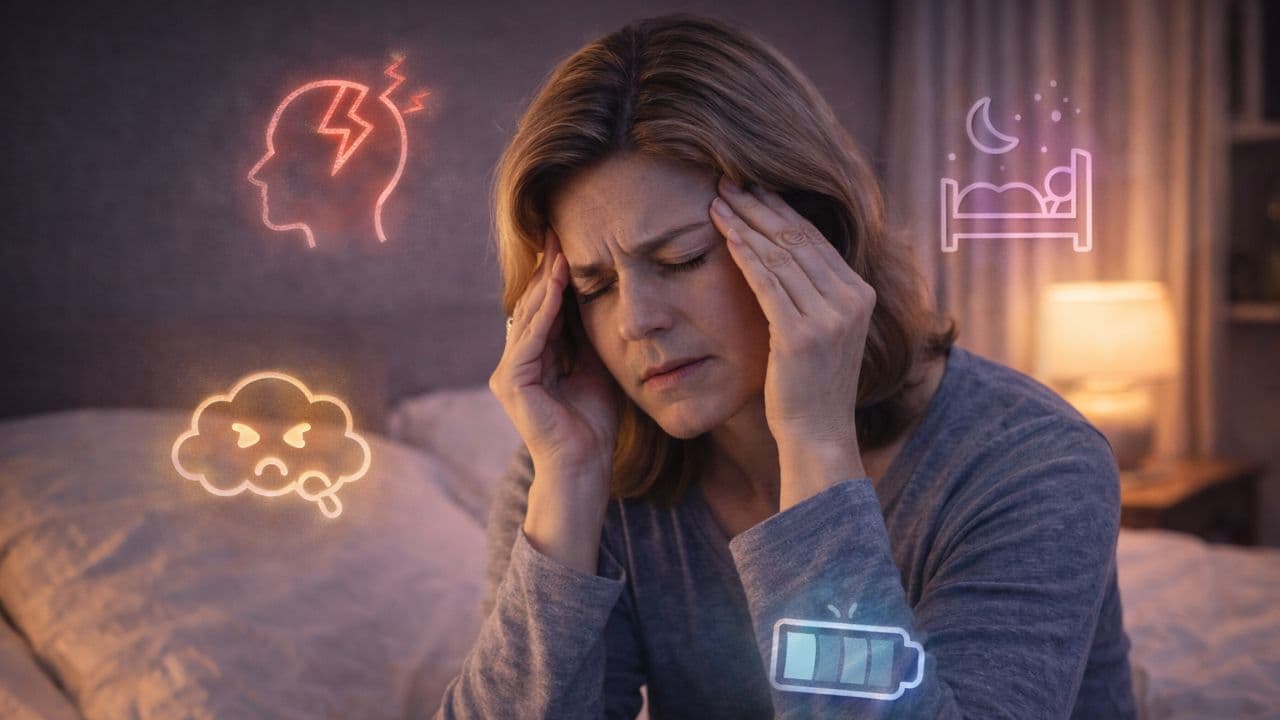
- Sleep apnea in women often presents as insomnia, morning headaches, fatigue, anxiety, and mood disturbances rather than the classic loud snoring and witnessed apneas — symptoms that overlap heavily with depression, leading to years of misdiagnosis.
- Menopause increases sleep apnea risk by 2.6 to 4.5 times due to declining estrogen and progesterone, which help maintain upper airway muscle tone — making screening particularly important for women during and after the menopausal transition.
The Diagnosis Gap
If you are a woman who has been told your fatigue is stress, your insomnia is hormonal, or your mood changes are depression — and nothing has improved — there is a possibility that no one has considered: sleep apnea.
Sleep apnea in women is not rare. It is underdiagnosed — massively so. The clinical tools, the patient stereotypes, and the symptom presentations that drive diagnosis were all built around male patients. The result is a diagnostic gap that leaves millions of women untreated for a condition that responds extremely well to therapy.
Actual Population Ratio:
Clinical Diagnosis Ratio:
The gap between a 2-3:1 population ratio and an 8-10:1 clinical diagnosis ratio means that for every woman correctly diagnosed with sleep apnea, four to five others are living with it unaware. Many of these women have been treated for depression, anxiety, insomnia, or chronic fatigue syndrome — conditions that share symptoms with sleep apnea but have fundamentally different causes.
How Sleep Apnea Presents Differently in Women
The reason women go undiagnosed is not that they have fewer symptoms — it is that their symptoms look different. Sleep apnea in women often presents with a cluster of complaints that do not match the classic male presentation of loud snoring and witnessed apneas.
Insomnia and Difficulty Staying Asleep
Women with sleep apnea frequently report difficulty falling asleep, frequent nighttime awakenings, and early morning waking — symptoms that closely mimic primary insomnia. The micro-arousals caused by airway obstruction may not feel like choking or gasping but simply like "waking up for no reason."
Fatigue, Brain Fog, and Difficulty Concentrating
While men with OSA often report sleepiness (falling asleep during activities), women more commonly describe fatigue — a pervasive tiredness that does not improve with rest. This distinction matters because sleepiness and fatigue trigger different clinical pathways, and fatigue is more often attributed to depression or hormonal changes.
Mood Disturbances: Anxiety, Depression, Irritability
Disrupted REM sleep impairs emotional regulation. Women with undiagnosed OSA are 2-3 times more likely to receive a depression diagnosis than women without OSA. If antidepressants have not fully resolved your mood symptoms, disrupted breathing during sleep may be a contributing factor that has not been investigated.
Morning Headaches
Sleep apnea headaches result from elevated CO2 and disrupted blood flow during the night. They are typically bilateral, pressing, and resolve within 30-60 minutes of waking. Women report morning headaches at a higher rate than men with comparable OSA severity, yet the symptom is often attributed to tension or migraine.
Quieter Snoring or No Snoring at All
Women with sleep apnea tend to snore less loudly and less frequently than men. Some do not snore at all — or snore only in certain positions or during certain phases of the menstrual cycle. Because loud snoring is the symptom most strongly associated with sleep apnea in public awareness, its absence in women contributes significantly to underdiagnosis.
If this symptom cluster sounds familiar, compare it with our guide on what sleep apnea actually feels like — the daily experience is the same underlying condition, but the way it surfaces in women often follows a different pattern.
Why Doctors Miss It in Women
The diagnostic gap is not caused by physician negligence. It is a systemic issue rooted in how sleep medicine was developed, how screening tools were validated, and how clinical training emphasizes certain presentations.
What Screening Tools Measure Well:
What They Often Miss in Women:
The STOP-BANG questionnaire and Epworth Sleepiness Scale — the two most widely used screening tools — were developed and validated primarily in male populations. They perform well for the classic male presentation but have significantly lower sensitivity for women. A woman can score "low risk" on both questionnaires and still have moderate-to-severe obstructive sleep apnea.
If this sounds like your experience: A low score on a screening questionnaire does not rule out sleep apnea — especially for women. If you have persistent fatigue, insomnia, or mood symptoms that have not responded to treatment, a home sleep test is the most definitive next step.
Hormones and Sleep Apnea
The hormonal connection explains both why women are somewhat protected before menopause and why risk increases dramatically after it. Estrogen and progesterone play direct roles in maintaining upper airway muscle tone and respiratory drive during sleep.
Menopause and OSA Risk
Declining estrogen and progesterone during the menopausal transition reduce upper airway dilator muscle activity and respiratory drive. Postmenopausal women have 2.6 to 4.5 times higher OSA prevalence compared to premenopausal women, even after adjusting for age and BMI.
Pregnancy and Sleep-Disordered Breathing
Pregnancy increases OSA risk due to weight gain, hormonal shifts, fluid retention, and upper airway edema. Gestational sleep apnea is estimated to affect 10-26% of women by the third trimester and is associated with higher rates of gestational diabetes, preeclampsia, and preterm birth.
Menstrual Cycle Variations
Sleep apnea severity can fluctuate across the menstrual cycle. Some premenopausal women experience worse symptoms during the luteal phase, when progesterone peaks and then drops. This cyclical variation can make the condition harder to detect on a single-night sleep test.
Research suggests that hormone replacement therapy (HRT) may reduce sleep apnea prevalence in postmenopausal women by 40-50%, likely by helping maintain airway muscle tone. However, HRT is not a standalone treatment for diagnosed OSA — both hormonal management and sleep apnea treatment should be discussed with your healthcare providers.
Risk Factors Specific to Women
While many sleep apnea risk factors apply to both men and women, certain factors carry particular significance for women — either because they are more prevalent or because they are more commonly overlooked.
Key Risk Factors for Women:
If you recognize two or more of these risk factors alongside persistent fatigue, insomnia, or mood symptoms, the probability of sleep apnea increases significantly. The 80% undiagnosed rate means that most people with sleep apnea — and especially most women — have never been tested.
Getting the Right Diagnosis
If you suspect sleep apnea may be contributing to your symptoms, here is how to navigate the diagnostic process effectively — even if your primary care physician has not raised it.
Advocate for a Sleep Test — Not Just a Questionnaire
If your provider offers only a screening questionnaire and your score comes back low, request a home sleep test anyway. Explain that standard screening tools have lower sensitivity for women and that your symptoms warrant objective measurement. A home sleep test is the definitive answer.
Document Your Symptoms Comprehensively
Keep a 1-2 week symptom diary noting fatigue levels, headaches, mood, nighttime awakenings, and any observations from a bed partner. This documentation helps providers see the full pattern rather than isolated complaints.
Mention Failed Treatments
If you have tried antidepressants, sleep aids, insomnia therapy, or hormonal treatments without full symptom resolution, tell your provider. Partial response to these treatments is a clinical clue that an underlying condition — like sleep apnea — may be contributing.
Request a Home Sleep Test
A portable sleep study device measures your breathing during sleep in the comfort of your own bed. Results are typically available within days and provide a clear, objective answer. Most insurance plans, Medicare, and TRICARE cover home sleep testing.
For a complete walkthrough of the testing process, see our guide on what to expect from a home sleep test. The process is straightforward, non-invasive, and provides definitive results.
Treatment Options for Women
Once diagnosed, sleep apnea treatment for women follows the same evidence-based pathways as for men — with some nuances that can improve outcomes and adherence.
| Treatment | Best For | Adherence |
|---|---|---|
| Oral Appliance Therapy | Mild-to-moderate OSA; patients who prefer a discreet, portable, mask-free option | 77-91% nightly use at 1 year |
| CPAP | Moderate-to-severe OSA; gold-standard when used consistently | ~50% abandon within 1 year |
| Positional Therapy | Position-dependent OSA (worse when sleeping on back); adjunct to primary treatment | Varies by method and comfort |
| Weight Management | Patients with BMI over 30; supports primary treatment effectiveness | Most effective as complement, not standalone |
Many women prefer oral appliance therapy because it is discreet, silent, requires no mask or machine, and fits easily into travel and daily routines. Custom-fitted by a dentist trained in dental sleep medicine, oral appliances gently advance the lower jaw to keep the airway open during sleep. They are FDA-cleared for mild-to-moderate OSA and for CPAP-intolerant patients with severe OSA.
Do Not Accept "It Is Just Stress" Without Testing
If you have lived with persistent fatigue, insomnia, headaches, or mood disturbances and been told it is stress, depression, or menopause — without anyone checking your breathing during sleep — you deserve a definitive answer. A home sleep test takes one or two nights, is completely non-invasive, and can either confirm a treatable condition or rule it out entirely. Either way, you gain clarity.
Take our free 2-minute sleep assessment to evaluate your risk — no obligation, instant results. It was designed to capture the symptom patterns that standard screening tools often miss in women.
Frequently Asked Questions
Why don't standard sleep apnea questionnaires work well for women?
The most widely used screening tools — STOP-BANG and the Epworth Sleepiness Scale — were developed and validated primarily in male populations. They emphasize snoring, witnessed apneas, and BMI, symptoms that are less predictive in women who more commonly present with fatigue, insomnia, and mood disturbances.
Does pregnancy increase sleep apnea risk?
Yes. Pregnancy increases OSA risk due to weight gain, hormonal changes, fluid retention, and nasal congestion. Gestational sleep apnea is estimated to affect 10-26% of pregnant women by the third trimester and is associated with higher rates of gestational diabetes, preeclampsia, and preterm birth.
Should women going through menopause be screened for sleep apnea?
Given that menopause increases OSA risk by 2.6 to 4.5 times, screening is recommended for postmenopausal women who report new-onset snoring, sleep disruption, fatigue, or morning headaches. If sleep problems began around the menopausal transition, sleep apnea should be considered alongside other hormonal explanations.
Can hormone replacement therapy help with sleep apnea?
Research suggests HRT may reduce sleep apnea prevalence in postmenopausal women by 40-50%, likely by helping maintain upper airway muscle tone. However, HRT is not a standalone treatment for diagnosed OSA. Both hormonal management and sleep apnea treatment should be discussed with your healthcare providers.