Snoring vs Sleep Apnea: How to Tell the Difference
Not all snoring is sleep apnea — but all sleep apnea involves snoring. Here is how to tell the difference and when you should be concerned.
Reviewed by Dr. Andrew Gamache, DDS, D-IAOS
Last updated June 2025
Key Takeaways
- Simple snoring is annoying but not dangerous — obstructive sleep apnea is a serious medical condition that increases your risk of heart attack, stroke, and accidents.
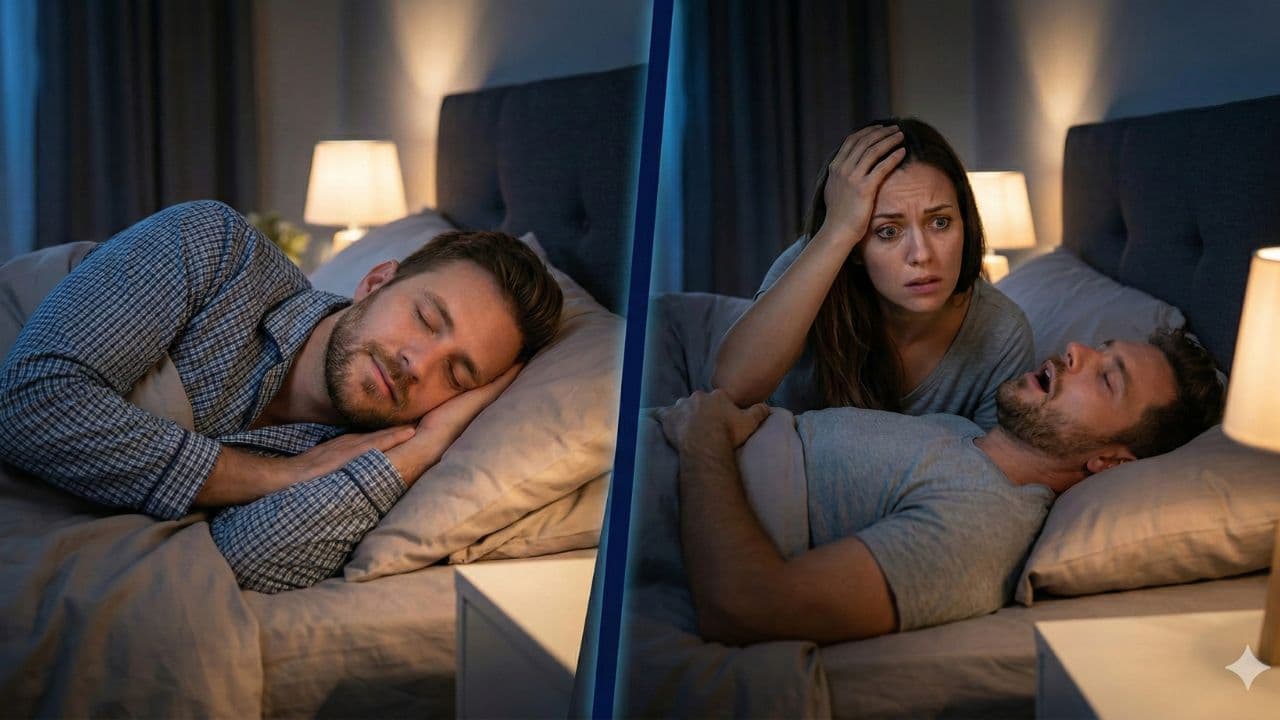
- The hallmark sign of sleep apnea is the snore-silence-gasp pattern: loud snoring, a period of silence where breathing stops, then a choking gasp.
- The only definitive way to tell the difference is a sleep study — and home sleep tests now make diagnosis fast, convenient, and accurate.
Snoring and Sleep Apnea Are Not the Same
Snoring is the sound of air vibrating through a partially narrowed airway. Sleep apnea is the complete or near-complete collapse of that airway, causing breathing to stop repeatedly throughout the night. While snoring is the most recognizable symptom of sleep apnea, not everyone who snores has sleep apnea — and not everyone with sleep apnea snores loudly.
The critical difference is what happens to your breathing. Simple snoring does not significantly reduce airflow or cause oxygen levels to drop. Sleep apnea causes repeated pauses in breathing — sometimes lasting 10 seconds or longer — that reduce blood oxygen levels and force your brain to briefly wake you up to restart breathing. These micro-arousals can happen dozens or hundreds of times per night.
Quick Summary
Simple snoring: annoying but not medically dangerous. Obstructive sleep apnea: a serious medical condition that increases your risk of heart attack, stroke, diabetes, and accidents.
What Is Simple Snoring?
Simple (or primary) snoring is caused by the vibration of soft tissue in the throat as air passes through a narrowed — but not blocked — airway. It tends to be intermittent, positional (worse on your back), and influenced by factors like alcohol consumption, nasal congestion, and muscle relaxation during sleep.
Characteristics of Simple Snoring
Simple snoring affects an estimated 40% of adult men and 24% of adult women. While it can be socially problematic — disturbing your partner's sleep and even leading to couples sleeping in separate rooms — it does not carry the same health risks as obstructive sleep apnea.
When Snoring Means Sleep Apnea
Sleep apnea snoring is qualitatively different from simple snoring. The pattern, volume, and accompanying sounds are key indicators that your snoring may be a sign of a more serious condition.
Red Flags in Snoring Patterns
The hallmark sign is the "snore-silence-gasp" pattern: loud snoring followed by a period of silence (where breathing has stopped), followed by a loud gasp or choking sound (where the brain triggers a micro-arousal to restart breathing). If your bed partner has witnessed this pattern, it is a strong indicator of obstructive sleep apnea.
Warning Signs to Watch For
Beyond snoring patterns, several other symptoms can help distinguish simple snoring from sleep apnea. If you experience two or more of the following in addition to snoring, you should be evaluated for OSA.
Do not ignore partner observations. Bed partners are often the first to notice the snore-silence-gasp pattern. Their observations are among the most reliable indicators of OSA — take them seriously.
Who Is at Risk?
Certain factors increase the likelihood that your snoring is a symptom of obstructive sleep apnea rather than simple snoring:
Excess weight
A BMI over 25 significantly increases OSA risk. Fat deposits around the neck and throat narrow the airway.
Neck circumference
A neck circumference greater than 17 inches in men or 16 inches in women is a strong predictor.
Age over 40
Sleep apnea risk increases with age as muscle tone in the throat decreases.
Male sex
Men are 2-3x more likely to have OSA, though women's risk increases significantly after menopause.
Family history
Having a parent or sibling with sleep apnea doubles your risk, suggesting anatomical and genetic factors.
Alcohol and sedative use
These substances relax throat muscles, which can convert simple snoring into obstructive apnea events.
How to Get Tested
The only definitive way to determine whether your snoring is simple snoring or obstructive sleep apnea is a sleep study. The good news is that testing has become much more convenient than it used to be.
Home Sleep Test
A small portable device you wear at home for 1-2 nights. It records your breathing, oxygen levels, heart rate, and body position. Most patients prefer this option for its convenience and comfort.
In-Lab Sleep Study
An overnight stay in a sleep lab with comprehensive monitoring. Recommended when other sleep disorders are suspected or if a home test is inconclusive.
Both tests measure the Apnea-Hypopnea Index (AHI) — the number of times per hour that breathing stops or slows significantly. An AHI of 5 or above indicates sleep apnea. Below 5 usually means simple snoring.
Not sure if your snoring warrants testing? Start with our free 2-minute sleep assessment to understand your risk level, or learn more about what to expect from a home sleep test.
Frequently Asked Questions
How can I tell if my snoring is sleep apnea?
The key indicators are snoring punctuated by silence and gasping sounds, snoring loud enough to hear through closed doors, excessive daytime sleepiness despite adequate sleep time, and morning headaches. If your bed partner has witnessed you stop breathing during sleep, that is a strong indicator of sleep apnea.
Can you have sleep apnea without snoring?
While snoring is the most recognizable symptom, not everyone with sleep apnea snores loudly. Some patients — particularly women — may have more subtle symptoms like fatigue, insomnia, or morning headaches without dramatic snoring.
What is the difference between snoring and sleep apnea?
Snoring is the sound of air vibrating through a partially narrowed airway. Sleep apnea is the complete or near-complete collapse of that airway, causing breathing to stop repeatedly. Simple snoring does not reduce oxygen levels. Sleep apnea causes repeated oxygen drops and micro-arousals that can happen dozens or hundreds of times per night.
When should I see a doctor about my snoring?
You should be evaluated if your snoring is accompanied by witnessed breathing pauses, excessive daytime sleepiness, morning headaches, difficulty concentrating, or frequent nighttime urination. Having two or more of these symptoms alongside snoring warrants a sleep study.