Sleep Apnea and Weight Gain: The Vicious Cycle
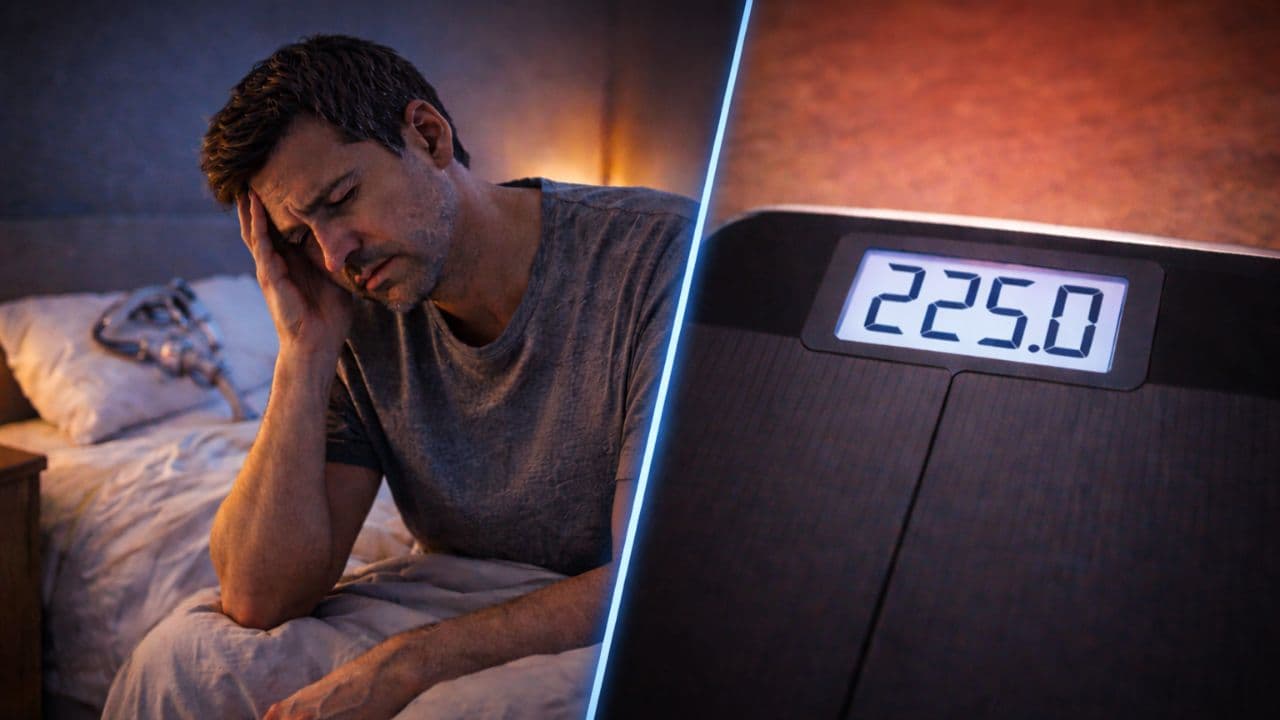
Sleep apnea makes you gain weight. Weight gain makes sleep apnea worse. Breaking this cycle requires understanding the hormonal and metabolic mechanisms at play.
Reviewed by Dr. Andrew Gamache, DDS, D-IAOS
Last updated May 2025
Key Takeaways
- Sleep apnea and weight gain form a self-reinforcing cycle — untreated sleep apnea disrupts hunger hormones, slows metabolism, and saps energy, making weight loss extremely difficult.
- A 10% weight gain increases apnea events by 32%, while sleep-deprived individuals consume 300-500 extra calories per day due to hormonal imbalance.
- Treating sleep apnea first is the critical first step — restoring quality sleep normalizes hormones, improves insulin sensitivity, and gives you the energy to be active.
The Vicious Cycle Explained
Sleep apnea and weight gain exist in a self-reinforcing cycle that can feel impossible to break. Excess weight contributes to the development and worsening of sleep apnea by depositing fat around the airway. At the same time, untreated sleep apnea disrupts the hormonal and metabolic systems that regulate hunger, energy expenditure, and fat storage — making it harder to lose weight or even maintain your current weight.
The Cycle
Research estimates that a 10% weight gain increases AHI (the number of apnea events per hour) by approximately 32%. Conversely, a 10% weight loss can reduce AHI by 26%. But here is the catch — losing that weight becomes significantly harder when sleep apnea is disrupting your metabolism.
How Sleep Apnea Disrupts Hunger Hormones
Your body relies on two key hormones to regulate hunger and satiety: leptin (the "full" signal) and ghrelin (the "hungry" signal). Untreated sleep apnea throws both of these hormones out of balance.
Ghrelin Increases
Sleep fragmentation causes ghrelin levels to spike, making you feel hungrier — especially for high-calorie, high-carbohydrate foods. Studies show that sleep-deprived individuals consume an average of 300-500 extra calories per day.
Leptin Decreases
Paradoxically, many sleep apnea patients develop leptin resistance — their bodies produce leptin, but the brain fails to respond to the "full" signal. You eat more because your brain never tells you to stop.
The combination of elevated ghrelin and reduced leptin sensitivity creates a powerful biological drive to overeat. This is not a willpower problem — it is a hormonal imbalance caused by disrupted sleep. Patients often report intense cravings for sugar and starch, particularly in the afternoon and evening hours when fatigue peaks.
Metabolic Slowdown
Beyond hunger hormones, untreated sleep apnea impairs your metabolism in several ways that promote weight gain and make weight loss difficult.
Insulin resistance
Repeated oxygen drops during sleep impair insulin sensitivity, causing your body to store more glucose as fat rather than using it for energy. This is the same mechanism that leads to type 2 diabetes — and sleep apnea doubles your diabetes risk.
Cortisol elevation
Sleep fragmentation raises cortisol (the stress hormone), which promotes abdominal fat storage. Belly fat is the most metabolically dangerous type of fat and is also the type most likely to compress the airway.
Reduced resting metabolic rate
Poor quality sleep decreases the number of calories your body burns at rest. Studies suggest that chronic sleep deprivation can reduce resting metabolic rate by 5-20%, which translates to storing an extra 100-400 calories per day as fat.
Growth hormone suppression
Growth hormone — essential for muscle maintenance and fat metabolism — is primarily released during deep sleep. Sleep apnea prevents adequate time in deep sleep, reducing growth hormone release and impairing your body's ability to build and maintain lean muscle.
The Exercise Barrier
Even when patients with untreated sleep apnea are motivated to exercise and eat well, their bodies work against them. Chronic fatigue from fragmented sleep makes physical activity feel overwhelming. Many patients describe feeling exhausted before they even start.
This creates another reinforcing loop: you are too tired to exercise, so you do not burn calories, so you gain weight, so your sleep apnea gets worse, so you are even more tired. The fatigue is not laziness — it is a direct consequence of your brain being woken up dozens or hundreds of times each night.
Safety concern: Exercising with untreated sleep apnea can be risky. The combination of oxygen desaturation at night and physical exertion during the day places additional stress on the cardiovascular system. If you have undiagnosed or untreated sleep apnea, consult your physician before starting an intense exercise program.
Breaking the Cycle
Breaking the sleep apnea-weight gain cycle requires addressing both issues simultaneously. Neither weight loss alone nor sleep apnea treatment alone is as effective as tackling both together.
Why Treating Sleep Apnea Comes First
Many physicians and patients make the mistake of saying "lose weight first, then we will see if you still have sleep apnea." This approach is backwards. Trying to lose weight while your sleep apnea is untreated is like trying to run with one leg tied behind your back — your hormones, metabolism, and energy levels are all working against you.
When sleep apnea is treated effectively — whether with CPAP, an oral appliance, or another therapy — patients consistently report:
The best first step is to find out whether sleep apnea is part of your equation. Take our free 2-minute sleep assessment or learn about the health dangers of untreated sleep apnea.
Frequently Asked Questions
Does sleep apnea cause weight gain?
Yes. Untreated sleep apnea disrupts leptin and ghrelin — the hormones that regulate hunger and fullness. It also causes insulin resistance, elevated cortisol, and reduced resting metabolic rate. These hormonal and metabolic changes create a powerful biological drive to overeat and store fat.
Can losing weight cure sleep apnea?
Weight loss can significantly reduce sleep apnea severity — a 10% weight loss can reduce AHI by 26%. However, trying to lose weight while sleep apnea is untreated is extremely difficult because your hormones, metabolism, and energy levels all work against you. Treating sleep apnea first makes weight loss more achievable.
Why am I always hungry if I have sleep apnea?
Sleep fragmentation causes ghrelin (the hunger hormone) to spike while reducing leptin sensitivity (the fullness signal). This creates intense cravings — especially for high-calorie, high-carbohydrate foods — that are not a willpower problem but a direct hormonal consequence of disrupted sleep.
Should I treat sleep apnea or lose weight first?
Treat sleep apnea first. Trying to lose weight with untreated sleep apnea is like running with one leg tied behind your back. Once sleep apnea is treated, patients consistently report more energy, reduced cravings, better appetite regulation, and improved insulin sensitivity — making weight loss much more achievable.