Is It Safe to Stop Using CPAP?
Stopping CPAP without an alternative is dangerous — but transitioning to a treatment you can actually sustain is the medically sound decision. Here is how to do it safely.
Reviewed by Dr. Andrew Gamache, DDS, D-IAOS
Last updated February 2026
Key Takeaways
- Stopping CPAP without an alternative returns you to the full risk profile of untreated sleep apnea — including 2x mortality risk for severe cases and progressive cardiovascular damage.
- Stopping CPAP is medically supported when you have completed an optimized trial, documented intolerance, and have an alternative treatment plan in place.
- The safest path is a planned transition: start the alternative treatment process before stopping CPAP entirely, so there is no unprotected gap.
The Question Behind the Question
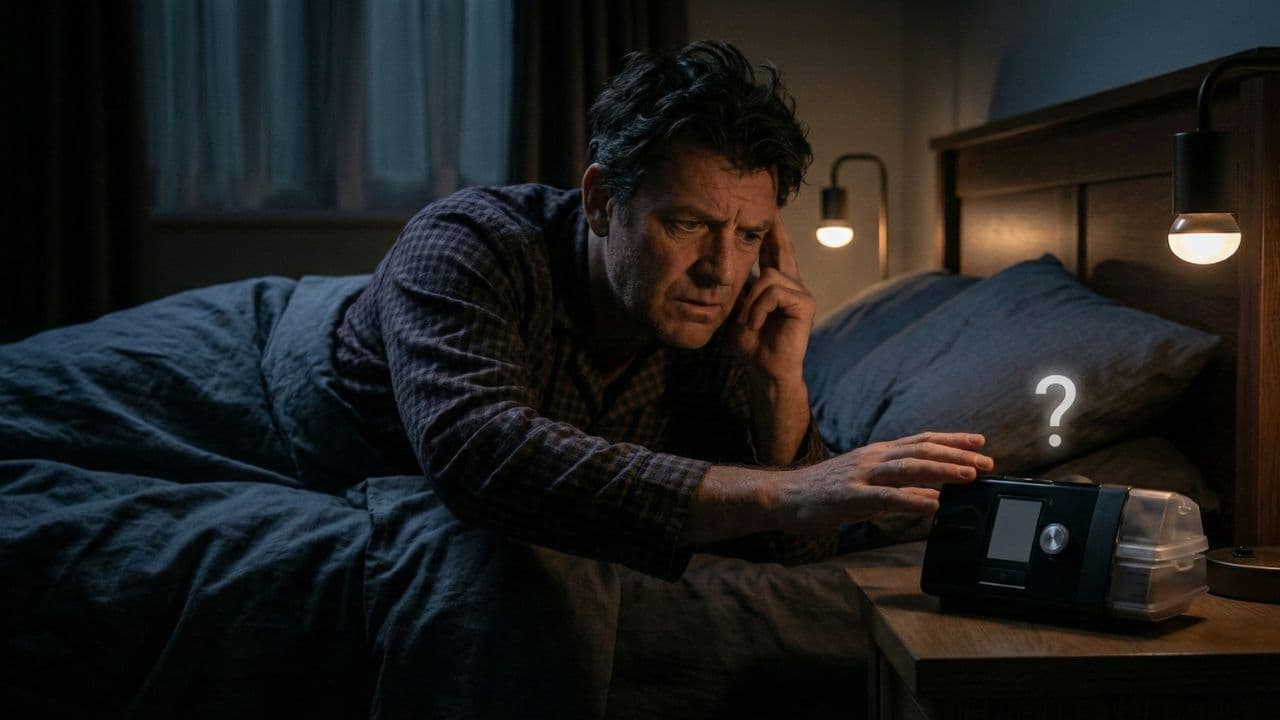
When patients search “is it safe to stop using CPAP,” they are rarely asking a neutral medical question. They are asking for permission. Permission to stop doing something that has made their life worse, not better. Permission to acknowledge that the treatment their doctor prescribed — the one they were told was the gold standard — is not working for them.
The honest answer is nuanced: stopping CPAP without an alternative treatment is not safe. But transitioning from CPAP to a treatment you can actually sustain is not only safe — it is the medically sound decision when CPAP is not working. The distinction between “stopping treatment” and “changing treatments” is everything.
30-50%
CPAP Abandonment Rate
Within the first 1-3 years, nearly half of all CPAP users stop entirely. You are not considering something unusual — you are considering something millions have already done.
46-83%
Below Compliance Threshold
Among those who keep their CPAP, most do not use it enough to meet the 4-hour nightly minimum. Subtherapeutic CPAP use provides partial protection at best.
2x
Mortality Risk (Severe Untreated OSA)
Severe untreated obstructive sleep apnea doubles all-cause mortality risk. This is the risk of stopping without replacing CPAP — not the risk of changing treatments.
77-90%
OAT Adherence at 1 Year
Oral appliance therapy retains patients at dramatically higher rates because it is comfortable enough to use consistently. Switching is not quitting — it is upgrading.
What Happens When You Stop Without an Alternative
Obstructive sleep apnea does not resolve on its own. When you stop CPAP — or any effective treatment — your airway resumes collapsing during sleep, exactly as it did before treatment began. The consequences begin immediately and compound over time.
Immediate and Progressive Consequences:
- Night 1: Apnea events resume immediately. Oxygen desaturation, micro-arousals, and sleep fragmentation return to pre-treatment levels.
- Week 1-2: Daytime fatigue, morning headaches, cognitive fog, and snoring return. Blood pressure begins rising, particularly during sleep.
- Month 1-3: Hormonal disruption resumes — increased cortisol, insulin resistance, and appetite dysregulation. Sleep debt accumulates rapidly.
- Months 3+: Cardiovascular strain compounds. Risk of hypertension, arrhythmia, and cardiovascular events escalates progressively.
- Years: Full untreated risk profile returns — 2x mortality, elevated stroke risk, accelerated cognitive decline, and worsening severity as the condition progresses.
For the complete evidence, see our articles on the consequences of untreated sleep apnea and how untreated OSA affects life expectancy. These risks are not theoretical — they are the documented outcomes of long-term untreated disease.
When Stopping CPAP Makes Medical Sense
Stopping CPAP is not inherently irresponsible. There are clinically valid reasons to discontinue CPAP — provided you have a plan for what comes next. The key distinction is between abandoning treatment and transitioning to a different treatment.
Stopping CPAP Is Medically Supported When:
If you recognize yourself in this list, you are not quitting — you are making a clinically informed decision to pursue a treatment that works. The CPAP compliance research supports what you already know: a treatment that a patient cannot sustain is not an effective treatment, regardless of its theoretical efficacy.
A Safe Transition Plan
If you have decided to move away from CPAP, the safest approach is a planned transition — not an abrupt stop. Here is the recommended process to minimize the gap between treatments.
Download Your CPAP Data Before Anything Else
Your CPAP machine stores months of usage data — hours per night, leak rates, residual AHI, and pressure settings. This data is clinically important and financially valuable for insurance pre-authorization of alternatives. Download it or ask your DME supplier for a printout before returning the machine.
Schedule an Alternative Treatment Consultation
Contact a dental sleep medicine specialist for an oral appliance therapy evaluation — or discuss Inspire or surgical options with your sleep physician. Do this before stopping CPAP so the transition process is already underway.
Continue CPAP During Transition (Even Imperfectly)
Even 3-4 hours of CPAP use provides some cardiovascular protection. Continue wearing it as much as you can tolerate while your alternative treatment is being arranged. Some protection is better than none during the transition period.
Coordinate With Your Providers
Ensure your sleep physician and dental sleep medicine specialist are communicating. A coordinated transition means your sleep study, CPAP data, and clinical notes all flow to the right provider without you having to manage it.
Confirm Treatment Effectiveness
After starting your alternative treatment, complete a follow-up sleep test to verify that the new approach is effectively reducing your AHI. This objective data confirms you have successfully transitioned — not just stopped one treatment and hoped for the best.
What Your Body Experiences During Transition
Patients often ask what happens physically during the gap between stopping CPAP and starting an alternative. Understanding the timeline helps you make informed decisions about urgency and expectations.
Sleep Quality
Apnea events resume immediately when CPAP is removed. You will likely notice a return of snoring, restless sleep, and morning grogginess within the first few nights. If you had adapted to better sleep on CPAP, the contrast may feel dramatic.
Cognitive Function
Daytime fatigue, difficulty concentrating, and memory issues can return within 1-2 weeks of stopping treatment. If you were using CPAP effectively for months or years, the cognitive benefits you gained erode relatively quickly without continued treatment.
Cardiovascular Markers
Blood pressure — particularly nighttime blood pressure — begins rising within days to weeks. The repetitive oxygen desaturations and adrenaline surges that drive cardiovascular risk resume with the first untreated night.
Metabolic Impact
Insulin resistance, cortisol elevation, and hunger hormone disruption resume within weeks. If you had been experiencing weight stability or loss with CPAP, untreated sleep apnea can reverse those gains through hormonal mechanisms.
This timeline is why a planned transition — starting your alternative before fully stopping CPAP — is the safest approach. The shorter the gap, the less your body is exposed to untreated sleep apnea.
Alternative Treatment Options
If you are stopping CPAP, you need to replace it — not simply remove it from the equation. Here is how the primary alternatives compare for patients transitioning away from CPAP.
| Factor | Oral Appliance | Inspire Implant |
|---|---|---|
| Candidacy | Mild-to-severe OSA, any BMI | Moderate-to-severe, BMI < 35 |
| Process | Non-invasive, custom fitting | Surgical implantation |
| Time to Treatment | 3-6 weeks | 1-2 months post-surgery |
| AHI Reduction | 65-85% | ~79% |
| Reversible | Yes — stop wearing anytime | Surgical removal required |
| Insurance | Most PPO, Medicare, TRICARE | Most major carriers with prior auth |
For most patients leaving CPAP, oral appliance therapy is the fastest and most accessible path to protection. It requires no surgery, no recovery period, and no equipment beyond a small custom-fitted mouthpiece. For a complete overview of all options, see our article on CPAP alternatives your doctor might not mention or our complete guide to oral appliance therapy.
Making the Decision
The decision to stop CPAP is not binary — it is not “keep suffering with CPAP” or “abandon treatment entirely.” There is a third option that the CPAP-centric treatment model often fails to present: transition to a treatment that fits your life while still protecting your health.
The Bottom Line: Stopping CPAP is safe when you are transitioning to an alternative treatment under medical guidance. Stopping CPAP without any alternative is not safe — it returns you to the full risk profile of untreated obstructive sleep apnea. The distinction between “changing treatments” and “stopping treatment” is the difference between a medical decision and a health risk.
If you have already given up on CPAP or if you hate your CPAP but know you need treatment, the next step is a conversation with a specialist who understands your options — not another attempt at the same treatment that has already failed.
Take our free 2-minute sleep assessment to see if oral appliance therapy may be right for you, or visit our CPAP alternatives page — designed specifically for patients who are ready to move beyond CPAP.
Frequently Asked Questions
What happens if I stop using my CPAP?
Apnea events resume immediately on the first night without CPAP. Within 1-2 weeks, daytime fatigue, morning headaches, and cognitive fog return. Over weeks to months, blood pressure rises, metabolic disruption resumes, and you return to the full cardiovascular risk profile of untreated sleep apnea. These consequences apply regardless of how long you previously used CPAP.
Can I just stop CPAP cold turkey?
It is not recommended. The safest approach is a planned transition: schedule an alternative treatment consultation, continue CPAP (even imperfectly) during the transition period, and confirm the new treatment is working with a follow-up sleep test. Abruptly stopping without an alternative plan leaves your sleep apnea completely untreated.
When is it OK to stop CPAP?
Stopping CPAP is clinically appropriate when you have completed a genuine 30-90 day optimized trial, documented intolerance (via machine data and provider notes), and have an alternative treatment arranged. The key is transitioning to a different treatment — not abandoning treatment altogether.
What is the safest CPAP alternative?
Oral appliance therapy is the most accessible and well-studied alternative for most patients. It is FDA-cleared, AASM-recommended, non-invasive, and achieves 77-90% adherence at one year. For patients with moderate-to-severe OSA and BMI under 35, the Inspire hypoglossal nerve stimulator is another FDA-approved option. The safest alternative is the one you will use consistently.